


18650 vs. 21700 Cells: How to Choose the Right Battery for Your Application
In the fast-changing world of lithium battery technology, picking the right cell type is very important. This choice affects the performance, durability, and cost of your battery pack.
The most common cylindrical lithium-ion cells are the 18650 and 21700 cells. These are the main choices in the industry. Both have proven their reliability in electric bicycles, power tools, energy storage systems, and electric vehicles. But which one is better for your application?
It explains the main differences between 18650 and 21700 battery cells. This will help you make a smart choice for your project.
1. Understanding the Basics: What Are 18650 and 21700 Cells?
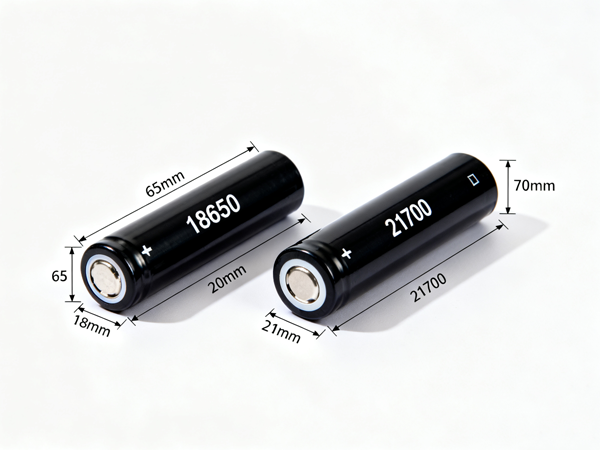
Both 18650 and 21700 are cylindrical lithium-ion battery formats. Their names refer to their physical dimensions:
18650 → 18mm diameter × 65mm length
21700 → 21mm diameter × 70mm length
The 21700 cell is about 50% larger in volume than the 18650. This size difference allows for higher capacity and energy density. This change was driven by the need for longer battery life and better performance. This is especially true for electric vehicles and e-bikes.
2. Capacity and Energy Density
One of the most significant advantages of 21700 cells is their higher capacity.
Typical 18650 cells: 2500–3500mAh
Typical 21700 cells: 4000–5000mAh
This means a battery pack built with 21700 cells can store more energy in the same physical space. The result is longer operating time and fewer cells needed per pack. This reduces the number of connections and possible points of failure.
For electric bicycles, AGVs (Automated Guided Vehicles), and portable power stations, 21700 cells offer longer range and better efficiency. They do this without greatly increasing the size or weight of the battery.
3. Power Output and Performance
In terms of power delivery, users can configure both 18650 and 21700 cells to provide high discharge rates. However, 21700 cells generally perform better under high-load conditions because of lower internal resistance and improved thermal characteristics.
18650: Suitable for devices requiring moderate power output such as small e-bikes, scooters, and tools.
21700: Preferred for high-performance applications such as electric motorcycles, EV battery modules, and industrial robots.
At Shenzhen First Power Energy, engineers choose the right cell type for each project. This helps meet power needs safely and efficiently.
4. Weight and Size Considerations
While 21700 cells provide higher capacity, they are also slightly heavier and larger. This makes 18650 cells better for small designs or places where space is tight, like light e-bikes or portable devices.
In comparison:
A standard 18650 cell weighs around 45g, while a 21700 cell weighs approximately 65g.
Using 21700s may reduce the total number of cells required, but the overall pack size could still increase.
Therefore, the right choice depends on whether you prioritize compactness or capacity.
5. Cost and Availability
Manufacturers have produced the 18650 cell in large quantities for over twenty years. It is easy to find from many brands like LG, Samsung, and Panasonic. This long production history makes 18650 cells more affordable and easier to source.
On the other hand, 21700 cells are newer and have become popular since Tesla used them in the Model 3 battery packs. The price of 21700s is slowly going down. However, they are still a bit more expensive. This is because of newer production lines and better performance features.
For large applications, First Power Energy helps customers balance cost and performance. They offer cell configurations that maximize energy density while staying within budget.
6. Thermal Management and Safety
Both 18650 and 21700 cells are designed with built-in safety mechanisms such as pressure relief valves and separators. However, 21700 cells generate more heat due to their higher energy density, requiring better cooling and pack design.
At Shenzhen First Power Energy, each battery pack is equipped with:
Smart BMS (Battery Management System) to monitor temperature, voltage, and current in real time.
Reinforced casing and heat dissipation design to ensure stable performance under continuous use.
UL2271, UN38.3, CE, and IEC certification to meet international safety standards.
These features make both 18650 and 21700 battery packs safe for global applications, from e-mobility to energy storage systems.
7. Application Scenarios: Where Each Cell Excels
ApplicationRecommended CellKey ReasonE-bikes (standard)18650Lightweight, cost-effectiveHigh-end e-bikes / e-motorcycles21700Higher capacity & powerPower tools18650Compact and reliableEnergy storage systems21700High energy densityAGV / AMR robots21700Long endurance and stabilityPortable power banks18650Smaller size, flexible configuration
This comparison clearly shows that 18650 cells remain excellent for cost-sensitive and lightweight designs, while 21700 cells dominate in high-capacity, long-range, and high-performance applications.
8. The Future Trend: Transition Toward 21700 and Beyond
As energy density continues to improve, more manufacturers are shifting from 18650 to 21700 formats. The transition is driven by:
The need for higher energy density per unit volume.
Reduced production complexity (fewer cells per pack).
Improved thermal efficiency and reduced internal resistance.
However, 18650 cells will continue to exist for many years due to their massive production scale, lower cost, and well-established supply chain.
At First Power, both 18650 and 21700 cell technologies are actively used, allowing the company to flexibly support various customer needs, from cost-effective mobility solutions to premium electric vehicles and industrial power systems.
9. How First Power Ensures Quality and Performance
As one of China’s professional lithium battery manufacturers, Shenzhen First Power Energy Co., Ltd. offers complete battery solutions from design to mass production. The company’s cell selection process ensures every pack meets the highest standards of performance and safety.
Key strengths include:
Over 12 years of manufacturing experience in lithium-ion and LiFePO4 batteries.
Strict quality control from cell testing to pack assembly.
Custom design capability to match specific voltage, capacity, and housing requirements.
Advanced testing equipment for cycle life, vibration, and temperature performance.
Global certification compliance (UL, CE, UN38.3, MSDS, IEC62133).
Whether customers require a 48V e-bike battery, a 24V AGV power system, or a custom lithium solution, First Power engineers ensure the optimal choice of 18650 or 21700 cells to deliver reliable, long-lasting results.
10. Choosing the Right Cell for Your Project
When deciding between 18650 and 21700 cells, consider the following key factors:
Energy Demand – For long-range or heavy-duty applications, 21700 cells provide better energy storage.
Physical Space – If your device has limited space, 18650 cells offer more flexibility.
Budget – 18650 cells are more cost-effective for mass-market products.
Weight vs. Performance – 21700 offers superior performance but adds slightly more weight.
Thermal Design – Ensure proper cooling if using 21700 cells in high-drain systems.
The ideal battery design often involves balancing these trade-offs, and working with an experienced manufacturer like First Power Energy ensures your final product achieves the best combination of cost, size, and performance.
The debate between 18650 and 21700 battery cells isn’t about which is universally better—it’s about which suits your specific application.
Choose 18650 for compact designs, cost-efficiency, and proven reliability.
Choose 21700 for higher capacity, longer runtime, and superior performance.
As a trusted manufacturer, Shenzhen First Power Energy Co., Ltd. provides both cell types with flexible customization, advanced BMS systems, and certified safety standards to meet global demands in electric mobility, robotics, and renewable energy.
With innovation at its core, First Power continues to lead the way in delivering powerful, safe, and sustainable lithium battery solutions for the future of clean energy.
About Shenzhen First Power Energy Co., Ltd.
Founded in 2012, Shenzhen First Power Energy Co., Ltd. specializes in designing and manufacturing lithium-ion and LiFePO4 battery packs for e-bikes, AGVs, energy storage, and custom OEM/ODM projects. With a focus on quality, safety, and innovation, the company serves global clients with reliable battery solutions certified to international standards.

 E-mail


 +86 13510702894