


48V eBike Battery Buying Guide 2025
The global electric bicycle market is changing. 48V eBike battery systems are now the top choice. They are popular for urban commuting, cargo eBikes, mountain eBikes, and delivery fleets. Compared with traditional 36V systems, 48V batteries offer higher power output, improved efficiency, and better performance under load.
For B2B buyers, distributors, and OEM brands, choosing a 48V eBike battery is not simply about voltage. Factors like capacity choice, battery cell type, BMS design, safety, waterproofing, certifications, and manufacturer skill all affect product reliability and brand reputation.
Shenzhen First Power Energy Co., Ltd. has years of experience in lithium battery research and production. They share this 48V eBike Battery Buying Guide to help international buyers make smart choices in 2025.
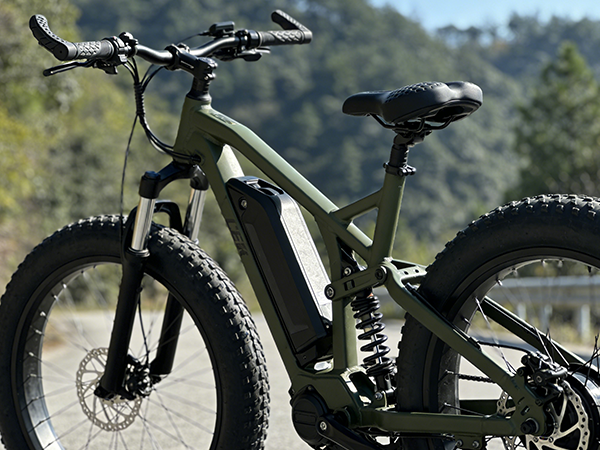
1. What Is a 48V eBike Battery?
A 48V eBike battery is a lithium battery pack designed to power electric bicycles using a higher voltage platform. Most 48V batteries are configured as:
13-series (13S) lithium-ion battery packs
Nominal voltage: 48V
Fully charged voltage: 54.6V (for NCM chemistry)
Common Capacity Options
10Ah
13Ah
15Ah
17.5Ah
20Ah and above
The selected capacity directly affects riding range, total weight, and end-user experience.
2. Key Advantages of 48V eBike Batteries Over 36V Systems
Higher Power Output
A 48V system delivers more power at the same current level, making it ideal for:
High-speed commuter eBikes
Cargo and utility eBikes
Mountain and off-road eBikes
Improved Energy Efficiency
Higher voltage means:
Lower operating current
Reduced heat generation
Less energy loss in cables and controllers
This results in a more efficient and stable drive system.
Better Acceleration and Climbing Ability
48V batteries provide stronger torque support during acceleration and hill climbing, especially under heavy load conditions.
3. How to Choose the Right 48V Battery Capacity
Before selecting capacity, buyers should clearly define the target application and riding scenario.
ApplicationRecommended CapacityUrban commuting10Ah–13AhLong-distance riding15Ah–17.5AhFood delivery & logistics17.5Ah–20AhCargo & heavy-load eBikes20Ah or higher
First Power Insight:
For OEM customers, designing different capacities using the same battery platform lowers tooling costs. It also makes product line management easier.
4. Battery Cell Chemistry: A Critical Performance Factor
Ternary Lithium (NCM / NCA)
High energy density
Lightweight design
Ideal for compact and long-range eBikes
Lithium Iron Phosphate (LiFePO₄)
Longer cycle life
Excellent thermal stability
Suitable for commercial fleets and safety-focused applications
Shenzhen First Power Energy Co., Ltd. provides flexible 48V battery solutions using different cell chemistries based on customer requirements and market positioning.
5. Battery Management System (BMS): The Brain of a 48V Battery
A high-quality BMS is essential for the safety and performance of a 48V eBike battery. Key BMS functions include:
Overcharge and over-discharge protection
Overcurrent and short-circuit protection
Temperature monitoring
Cell balancing
Accurate state-of-charge (SOC) estimation
Advanced smart BMS options can also support:
Bluetooth communication
Data logging and diagnostics
Customized communication protocols
First Power offers customized BMS development, ensuring seamless compatibility with different motor controllers and vehicle systems.
6. Battery Structure and Housing Design
Common 48V eBike battery designs include:
Down Tube Battery
Rear Rack Battery
Integrated In-Frame Battery
A reliable battery housing should feature:
Reinforced internal support structure
Shock and vibration resistance
Flame-retardant materials
IPX5–IPX7 waterproof protection
Before mass production, First Power conducts:
Vibration testing
Drop testing
Waterproof testing
High- and low-temperature cycling tests
These ensure durability under real-world riding conditions.
7. Safety Standards and Certifications for Global Markets
For international distribution, 48V eBike batteries must comply with multiple regulations and standards, including:
UN38.3
IEC 62133
EN 50604
UL 2271 / UL 2849 (North America)
CE / EMC
Working with a manufacturer experienced in global certifications significantly reduces compliance risks and time-to-market.
8. Evaluating a Reliable 48V eBike Battery Manufacturer
When sourcing a battery supplier, OEM and B2B buyers should evaluate:
In-house R&D and structural design capability
Stable mass production capacity
Quality control and traceability system
Certification and export experience
Long-term technical and after-sales support
Shenzhen First Power Energy Co., Ltd. We offer complete 48V eBike battery services. This includes design, production, and delivery worldwide.
9. Proper Use and Maintenance of 48V eBike Batteries
To maximize battery lifespan:
Avoid long-term storage at full charge or deep discharge
Do not charge in extreme temperatures
Use compatible chargers
Inspect connectors and housing regularly
Proper handling can significantly extend battery service life and maintain stable performance.
10. Frequently Asked Questions (FAQ)
Q1: Can a 48V battery be used with a 36V motor?
No. Voltage mismatch may damage the motor or controller and is not recommended.
Q2: What is the difference between 48V 13Ah and 48V 17.5Ah batteries?
They share the same voltage, but higher capacity provides longer range at the cost of additional weight.
Q3: How long does a 48V eBike battery typically last?
Most batteries offer 600–1000 full charge cycles, depending on cell chemistry and usage conditions.
Q4: Do 48V batteries generate more heat?
When properly designed with quality cells and a robust BMS, 48V systems operate efficiently and safely.
Q5: Does First Power support customized battery housings and connectors?
Yes. First Power provides full OEM and ODM customization, including housing design, BMS configuration, connectors, and certifications.
Conclusion: Choosing the Right 48V eBike Battery for Long-Term Success
A 48V eBike battery is more than just a power source. It directly affects vehicle performance, safety, user satisfaction, and brand value. In an increasingly competitive eBike market, selecting a reliable battery partner is critical to long-term success.
Shenzhen First Power Energy Co., Ltd. dedicates itself to providing safe, reliable, and customizable 48V eBike battery solutions for customers worldwide.

 E-mail


 +86 13510702894