


How to Choose an Industrial Battery Manufacturer for AGV
Automated guided vehicles (AGVs) are becoming important in factories and smart warehouses. Choosing the right power solution for them is crucial. The industrial battery used in an AGV directly affects system reliability, operating efficiency, safety, and total cost of ownership.
For AGV manufacturers, system integrators, and automation solution providers, picking the right industrial battery maker is important. This choice affects product performance and long-term customer satisfaction.
Shenzhen First Power Energy Co., Ltd. FirstPower makes custom industrial battery solutions for AGVs and automated equipment. They support global customers with smart design, reliable manufacturing, and long-term supply.
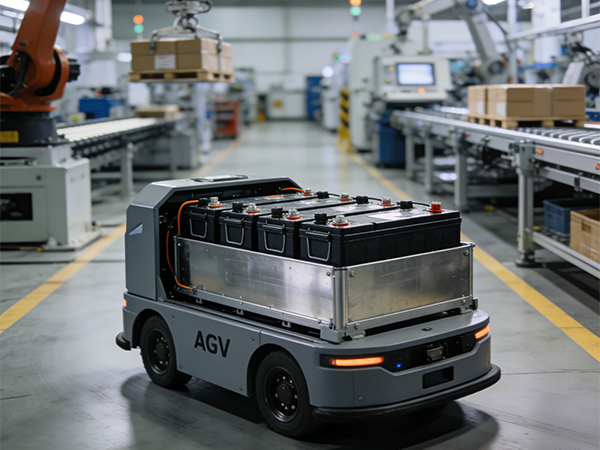
Why the Industrial Battery Matters in AGV Systems
AGVs operate in environments that demand precision, consistency, and uninterrupted performance. Unlike traditional vehicles, AGVs rely heavily on stable electrical systems to ensure navigation accuracy, sensor reliability, and communication stability.
An industrial battery for AGV applications must support:
Continuous operation with frequent charge and discharge cycles
Stable voltage output to protect control systems
Fast charging and opportunity charging
Integration with AGV control and monitoring systems
Long service life with minimal maintenance
Choosing the wrong battery manufacturer can lead to frequent failures, reduced uptime, and increased operational costs.
Step 1: Evaluate AGV Application Requirements
Before selecting an industrial battery manufacturer, it is essential to clearly understand your AGV’s operating requirements. A professional manufacturer will always begin with applying rather than offering a standard product.
Key factors include:
Operating voltage and capacity requirements
Continuous and peak discharge current
Operating hours per shift and number of shifts
Charging strategy (overnight charging or opportunity charging)
Operating environment (temperature, dust, humidity)
Installation space and mechanical constraints
Manufacturers who ask detailed technical questions demonstrate engineering capability and application experience.
Step 2: Look for Custom Industrial Battery Capabilities
AGV batteries are rarely standard products. Each AGV platform has unique electrical and mechanical requirements, making customization a critical factor.
A reliable industrial battery manufacturer for AGV applications should offer:
Custom voltage and capacity configuration
Tailored discharge performance for AGV drive systems
Mechanical structure design to match AGV chassis
Connector and cable customization
Battery communication interface customization
Shenzhen First Power Energy Co., Ltd. focuses on custom industrial battery solutions, ensuring that each battery pack is engineered specifically for its AGV application.
Step 3: Assess Battery Management System (BMS) Expertise
The Battery Management System is the core intelligence of an AGV battery. For automated vehicles, the BMS must do more than basic protection.
An advanced BMS for AGV applications should provide:
Overcharge, over-discharge, overcurrent, and short-circuit protection
Accurate state-of-charge (SOC) and state-of-health (SOH) estimation
Temperature monitoring and thermal protection
Cell balancing to extend battery life
Communication protocols such as CAN or RS485
Manufacturers with in-house BMS development capability can adapt the system to AGV control requirements, improving compatibility and performance.
Step 4: Verify Manufacturing and Quality Control Capabilities
Industrial AGV projects require long-term consistency. Selecting a manufacturer with strong production and quality control systems is essential.
Key manufacturing indicators include:
In-house battery pack assembly lines
Standardized production processes
Incoming material inspection and traceability
Aging tests and performance verification
Reliability and safety testing
A professional industrial battery manufacturer ensures that every AGV battery delivered matches the original design specifications, batch after batch.
Step 5: Safety Design for AGV Industrial Batteries
Safety is critical in automated environments where AGVs operate alongside personnel and other equipment. Battery safety directly affects workplace safety and system reliability.
Industrial batteries for AGVs should incorporate:
Multi-layer electrical protection via BMS
Robust mechanical enclosure design
Fire-retardant materials
Secure internal cell fixation to withstand vibration
Shenzhen First Power Energy Co., Ltd. integrates safety into every stage of battery design, from cell selection to structural engineering.
Step 6: Compliance With International Standards
AGVs are widely deployed in global markets, making regulatory compliance a key consideration when selecting an industrial battery manufacturer.
A qualified supplier should support compliance with standards such as:
UN38.3 for lithium battery transportation
IEC and EN standards
CE and other applicable certifications
Compliance reduces regulatory risks and simplifies AGV system deployment in international markets.
Step 7: Experience in AGV and Automation Projects
Experience matters. An industrial battery manufacturer with proven AGV project experience understands the real-world challenges of automated systems.
Relevant experience includes:
Supporting AGV OEMs and system integrators
Understanding duty cycles and charging strategies
Designing batteries for compact AGV platforms
Providing technical support during system integration
FirstPower has extensive experience delivering industrial battery solutions for AGVs used in logistics, manufacturing, and automated warehousing environments.
Step 8: Long-Term Supply and Technical Support
AGV projects often involve long product lifecycles. A reliable industrial battery manufacturer must offer stable long-term supply and responsive technical support.
Key support capabilities include:
Engineering support during development and testing
Rapid response to technical issues
Consistent product availability for future orders
Upgrade and optimization support as AGV systems evolve
Choosing a partner rather than a short-term supplier ensures long-term project success.
Common Mistakes When Choosing an AGV Battery Manufacturer
Many companies encounter issues because of avoidable mistakes during supplier selection, such as:
Choosing based on price alone
Selecting standard batteries without customization
Ignoring BMS capability and communication requirements
Overlooking long-term supply stability
Avoiding these mistakes helps ensure reliable AGV performance and lower total cost of ownership.
Why Choose Shenzhen First Power Energy Co., Ltd.
Shenzhen First Power Energy Co., Ltd. is a professional industrial battery manufacturer specializing in custom lithium battery solutions for AGVs and automated equipment.
Customers choose FirstPower because of:
Strong R&D and engineering capability
Customized industrial battery design
Advanced BMS integration
Stable manufacturing and quality control
Experience serving global B2B customers
From concept design to mass production, FirstPower supports AGV projects with reliable power solutions tailored to real-world applications.
The Future of AGV Industrial Battery Solutions
As AGV systems become more intelligent and interconnected, industrial batteries will continue to evolve. Future trends include:
Higher energy density for compact AGVs
Smarter BMS with predictive diagnostics
Deeper integration with AGV fleet management systems
Improved safety and thermal management
Choosing the right industrial battery manufacturer today helps AGV developers stay competitive in the future.
Frequently Asked Questions (FAQ)
Q1: What type of battery is best for AGV applications?
Lithium industrial batteries are the best choice for AGVs. They have a long cycle life, stable voltage, fast charging, and need little maintenance.
Q2: Can AGV batteries be customized for different vehicle models?
Yes. Professional manufacturers like Shenzhen First Power Energy Co., Ltd. provide customized industrial battery solutions based on voltage, capacity, mechanical design, and communication requirements.
Q3: Why is BMS communication important for AGVs?
BMS communication lets the battery share data with AGV control systems. This allows for real-time monitoring, fault detection, and better charging strategies.
Q4: How long does an industrial AGV battery typically last?
With good design and use, lithium industrial batteries for AGVs can last for thousands of charge cycles. This is much longer than traditional lead-acid batteries.
Q5: What certifications should AGV batteries have for international projects?
AGV batteries should comply with standards such as UN38.3, IEC, EN, and CE to ensure safe transportation and global market acceptance.

 E-mail


 +86 13510702894