


Pouch, Prismatic, and Cylindrical Batteries: Which Is Better?
In today’s rapidly evolving technology landscape, lithium batteries have become the backbone of countless modern applications. From powering electric vehicles (EVs) and robots to supporting consumer electronics and large-scale energy storage systems, **battery cell efficiency, reliability, and safety are more critical than ever**.
Among lithium battery technologies, the discussion around **pouch cells, prismatic cells, and cylindrical cells** is essential for understanding which solution best fits different use cases. Each cell format has unique structural characteristics, performance advantages, and design trade-offs.
At present, the most widely used lithium battery cell formats include **cylindrical cells, prismatic cells, and pouch cells**. There is no universally “best” option—the optimal choice depends entirely on the application. Cylindrical cells are known for durability and mature manufacturing, prismatic cells excel in space utilization, and pouch cells offer superior energy density and design flexibility.
In this article, **Shenzhen First Power Energy Co., Ltd. (FirstPower)** provides a comprehensive comparison of these three battery types. By examining their performance, mechanical properties, thermal behavior, manufacturing processes, and application suitability, we aim to help manufacturers, engineers, and system integrators make informed battery decisions.
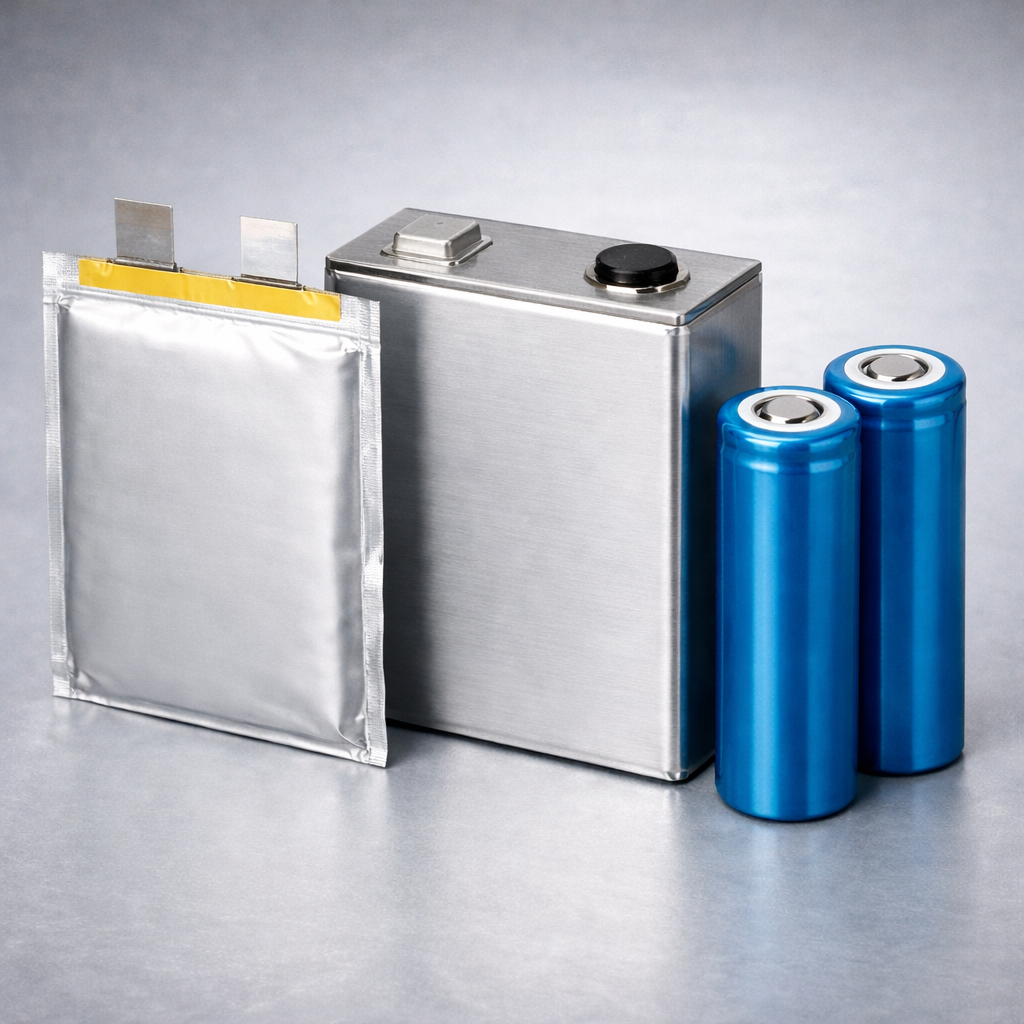
Overview of Battery Cell Types
Cylindrical Batteries
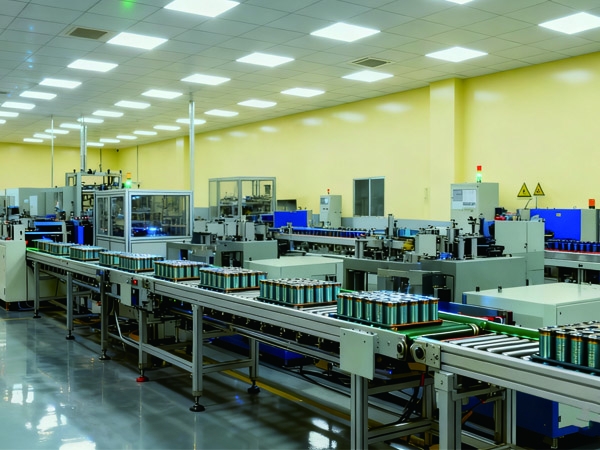
Cylindrical batteries are one of the earliest and most mature lithium battery formats. As the name suggests, they feature a cylindrical shape, with electrodes wound into a “jelly-roll” structure and enclosed in a rigid metal casing.
**Common applications:**
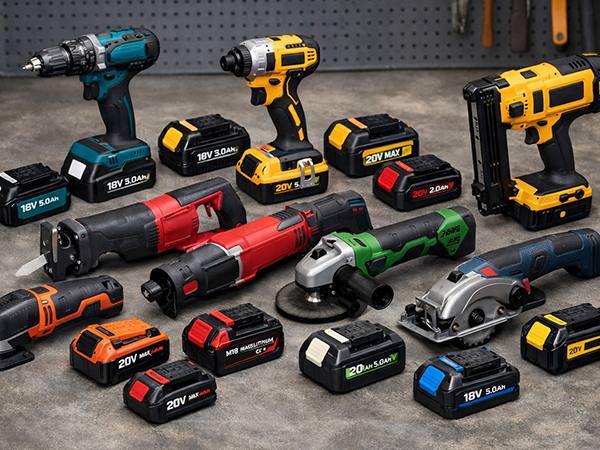
* Power tools
* Medical devices
* Consumer electronics
* Electric vehicles
**Typical models:** 18650, 21700
Prismatic Batteries
Prismatic batteries use a rectangular form factor and are housed in rigid metal or hard plastic enclosures. Internally, electrodes are either stacked or wound, allowing for efficient use of internal volume.
**Common applications:**
* Consumer electronics
* Laptops
* Electric vehicles
* Energy storage systems (ESS)
**Examples:** Widely used automotive-grade cells from manufacturers such as Samsung SDI and LG Energy Solution.
Pouch Batteries
Pouch batteries utilize a flexible laminated aluminum foil packaging, enabling lightweight construction and adaptable shapes. This design allows manufacturers to maximize energy density within constrained spaces.
**Common applications:**
* Smartphones and tablets
* Drones
* Wearable electronics
* Selected electric vehicle platforms
**Examples:** Custom-sized cells used in consumer electronics and specialized EV applications.
Performance Comparison
Energy Density
**Cylindrical batteries:**
Typically offer **250–300 Wh/kg**, thanks to efficient electrode packing and mature materials technology.
* *Advantages:* Excellent mechanical stability, standardized sizes, effective thermal dissipation
* *Disadvantages:* Lower module-level packing efficiency
**Prismatic batteries:**
Generally achieve **200–250 Wh/kg**, slightly lower than cylindrical cells but optimized for system-level integration.
* *Advantages:* High space utilization, robust structure
* *Disadvantages:* Heavier casing, lower energy density than pouch cells
**Pouch batteries:**
Can reach **300–350 Wh/kg** due to lightweight packaging and flexible design.
* *Advantages:* High energy density, lightweight, flexible form factor
* *Disadvantages:* Lower mechanical strength, higher swelling risk
Power Density
* **Cylindrical batteries:** Excellent power density and high discharge capability, ideal for power tools, medical devices, and high-performance EVs.
* **Prismatic batteries:** Moderate power density, suitable for balanced energy and power requirements in consumer electronics and EVs.
* **Pouch batteries:** Power density varies depending on design, making them suitable for highly customized applications such as drones and portable electronics.
Mechanical and Thermal Performance
Durability and Structural Strength
**Cylindrical batteries**
* Rigid metal casing provides superior structural integrity
* Highly resistant to vibration, shock, and physical damage
* Ideal for harsh operating environments
**Prismatic batteries**
* Rigid enclosures offer good mechanical strength
* More robust than pouch cells but less durable than cylindrical cells
* May deform under high stress but typically remain intact
**Pouch batteries**
* Lightweight and flexible packaging
* More susceptible to mechanical deformation and puncture
* Higher swelling risk under abuse or aging conditions
Thermal Management
**Cylindrical batteries**
* Metal casing and cylindrical geometry promote efficient heat dissipation
* Stable thermal behavior and reduced thermal runaway risk
**Prismatic batteries**
* Good heat dissipation due to larger surface area
* Often require additional cooling solutions in high-load applications
**Pouch batteries**
* Thermal performance varies widely
* Typically require advanced thermal management systems
* Higher risk of swelling and thermal instability if poorly managed
Manufacturing and Cost Considerations
Production Complexity and Cost
**Cylindrical batteries**
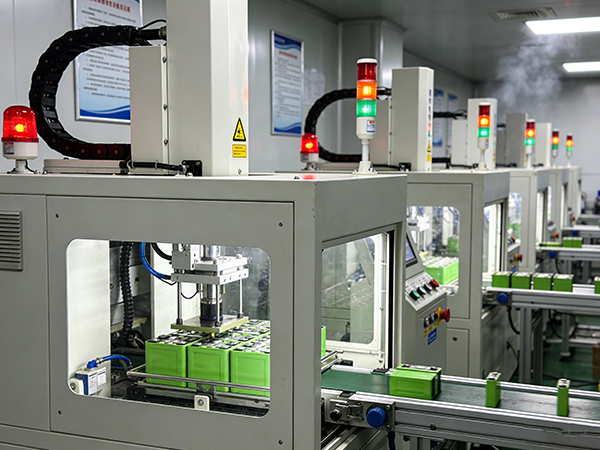
* Highly automated and standardized manufacturing processes
* Excellent scalability for mass production
* *Cost impact:* Lowest production cost due to economies of scale
**Prismatic batteries**
* More complex manufacturing and sealing processes
* Lower standardization compared to cylindrical cells
* *Cost impact:* Medium to high production cost
**Pouch batteries**
* Flexible designs require more manual handling
* Higher sensitivity to manufacturing defects
* *Cost impact:* Generally the highest cost due to materials and complexity
Scalability and Automation Potential
* **Cylindrical batteries:** Excellent scalability and automation potential
* **Prismatic batteries:** Moderate scalability with partial automation
* **Pouch batteries:** Limited scalability due to customization and manual processes
Long-Term Cost Implications
* **Cylindrical batteries:** Lowest long-term cost, benefiting from mature supply chains
* **Prismatic batteries:** Costs may decrease with scale but remain higher than cylindrical cells
* **Pouch batteries:** Higher long-term costs due to materials and manufacturing complexity
Safety and Reliability
**Cylindrical batteries**
* Built-in safety mechanisms such as pressure relief valves and thermal fuses
* Robust casing offers excellent physical protection
* Proven reliability and long service life
**Prismatic batteries**
* Integrated protection circuits and rigid housings
* Reliable performance with proper thermal management
* Moderate risk of deformation or swelling if poorly designed
**Pouch batteries**
* Often include safety features such as pressure relief structures
* Higher vulnerability to physical damage
* Require careful handling and advanced thermal protection
Conclusion
Each lithium battery format—**cylindrical, prismatic, and pouch**—offers distinct advantages depending on application requirements.
* **Cylindrical batteries** stand out for durability, mature manufacturing, and reliable performance, making them ideal for EVs, power tools, and industrial equipment.
* **Prismatic batteries** provide a balanced solution with efficient space utilization and moderate cost, well-suited for consumer electronics and energy storage systems.
* **Pouch batteries** excel in lightweight and high-energy-density applications where flexible design is critical, such as smartphones and drones.
When selecting the optimal battery type, factors such as energy density, power requirements, mechanical durability, thermal management, safety, and budget must all be carefully evaluated.
About Shenzhen First Power Energy Co., Ltd. (FirstPower)
A professional lithium battery manufacturer specializing in **custom battery solutions for robotics, electric vehicles, industrial equipment, and energy storage systems**.
FirstPower uses only **top-tier battery cells from leading brands such as Samsung, LG, EVE, and CBAK**, combined with advanced **intelligent BMS designs and optimized thermal management**. Our battery packs are engineered for **high safety, long service life, and reliable performance**, minimizing the risk of fire or thermal incidents.
FAQ
**Q1: What are the main advantages of lithium-ion batteries over lead-acid batteries?**
A: Compared with lead-acid batteries, lithium-ion batteries offer higher energy density, longer lifespan, faster charging, and significantly lower weight, making them ideal for EVs, energy storage systems, and modern electronic devices.
**Q2: How do pouch cells enhance lithium battery pack performance?**
A: Pouch lithium-ion cells feature lightweight, flexible packaging that allows higher energy density and improved space utilization. When properly engineered with robust BMS and thermal management, they can significantly enhance overall battery efficiency and performance.

 E-mail


 +86 13510702894