


Key Considerations for Electric Bicycle Battery Installation
With the increasing popularity of electric bicycles, the safety of battery installation directly impacts the vehicle's performance and lifespan. As a company with many years of experience in lithium-ion battery manufacturing, Shenzhen First Power Energy Co., Ltd. consistently emphasizes that correct electric bicycle battery installation is the first step in ensuring battery safety and overall vehicle reliability. This article will share key considerations for battery installation from a professional perspective, helping brands and users use batteries scientifically and safely.
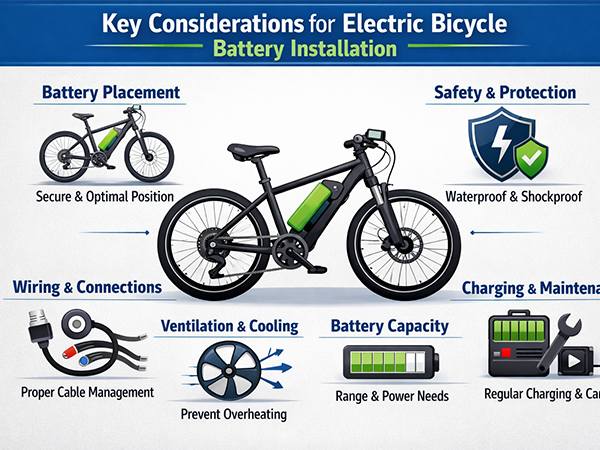
Part 1. Pre-installation Preparations
1. Check Battery Model and Vehicle Compatibility
Confirm that the electric bicycle's rated voltage matches the battery voltage (e.g., 36V/48V).
Confirm that the battery capacity and dimensions match the battery compartment.
Avoid using incompatible batteries to prevent battery damage or circuit overload.
2. Check Battery Condition
The battery should have no visible damage, cracks, or leakage.
Ensure the terminals are clean and free of oxidation or dirt.
Check that the battery charge is within the safe storage range (40%-60%).
Part 2. Key Considerations During Installation
1. Follow the Correct Installation Direction
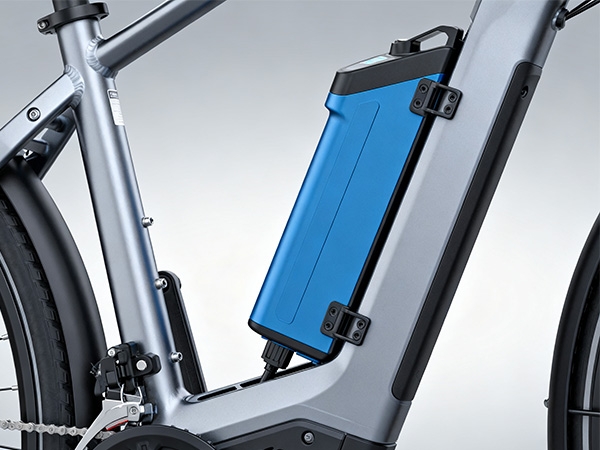
The battery must be installed according to the electric bicycle's design direction, avoiding inversion or tilting.
Ensure the battery clips are securely fastened during installation to prevent loosening due to riding vibrations.
2. Pay Attention to Electrical Connections
The connectors should be fully inserted to avoid loose connections.
Prevent metal objects from contacting the positive and negative terminals to prevent short circuits.
Use the original or compatible charger for connection to ensure circuit safety.
3. Fixing and Protection
The outer casing should be securely fixed to prevent damage to the internal support structure due to prolonged vibration.
Ensure adequate waterproofing and dustproofing measures, especially in rainy or humid environments.
Part 3. Safety Check After Installation
Check that the battery indicator light and BMS status are normal.
Gently shake the battery to confirm there is no looseness or abnormal noise.
Start the vehicle and perform a short, low-speed test to check the battery output stability.
Part 4. Professional Advice from First Power Energy
Use original batteries and accessories: Ensure overall vehicle compatibility and safety.
Regular checks: Check the battery fixing status and connector cleanliness every few weeks.
Pay attention to ambient temperature: Avoid installation and use in extreme high or low temperatures.
Follow the user manual: The operating instructions provided by the vehicle manufacturer and battery manufacturer are the best reference.
By strictly adhering to installation guidelines, you can effectively reduce the risk of battery damage, short circuits, and thermal runaway, while also extending battery life.
Part 5. Tips for Brand Customers
For electric bicycle manufacturers and distributors, safe battery installation guidelines are not only an important part of the user experience but also a reflection of brand reputation. Level 1 Power provides a complete solution, from battery selection and design to installation training, helping customers reduce after-sales risks and enhance brand competitiveness.
Part 6. Conclusion
Safe installation of electric bicycle batteries is a crucial step in ensuring overall vehicle performance and riding safety. Level 1 Power will continue to provide reliable, safe, and long-term battery solutions to global customers with its professional technology, mature processes, and systematic services.



 E-mail


 +86 13510702894