


Can a 24V battery be used in a 36V electric bicycle?
In the daily use and after-sales service of electric bicycles, a frequently asked question is:
Can a 24V battery be used in a 36V electric bicycle?
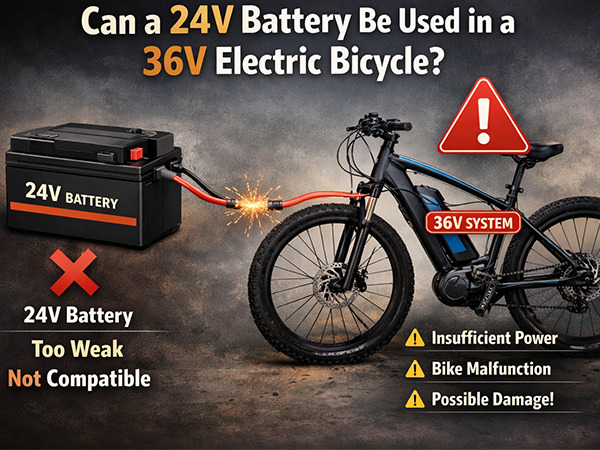
In most cases, a 24V battery is not suitable for a 36V electric bicycle, and its use is not recommended.
Below, we will provide a systematic analysis from the perspectives of technical principles, safety risks, and practical applications.
Part 1. What are the fundamental differences between 24V and 36V?
1. Different voltage levels, completely different system designs
24V battery system
Mostly used in low-power devices, such as some electric scooters and small personal mobility devices
36V battery system
The mainstream configuration for electric bicycles, compatible with higher power motors and controllers
The motor, controller, BMS, and the entire vehicle circuit of an electric bicycle are all designed around the rated voltage.
Part 2. What happens if a 24V battery is used in a 36V electric bicycle?
From a practical engineering perspective, the following problems may occur:
1. The motor may not work properly or have severely insufficient power
Insufficient voltage leads to a significant decrease in motor speed and torque
Weak starting power, severely limited climbing performance
In some models, the motor may not even start
2. The controller may directly report an error or activate protection
36V controllers usually have an undervoltage protection threshold
The 24V battery will be identified as an abnormal voltage by the system
After triggering the protection, the entire vehicle will be unable to operate
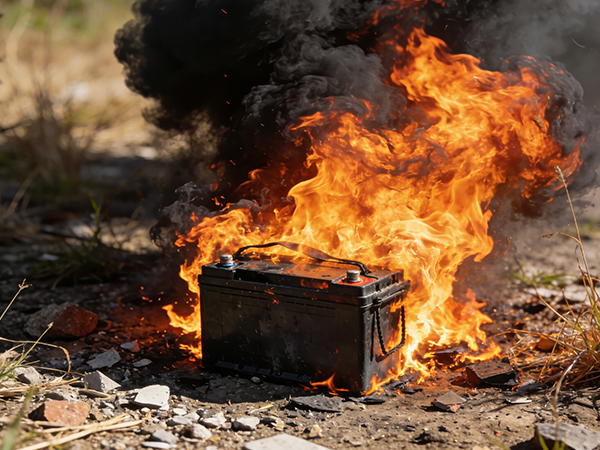
3. Long-term overload of the battery poses safety hazards
To compensate for insufficient voltage, the system will increase the current
Increased battery heating, significantly accelerated aging
Increased risk of BMS overcurrent protection and even thermal runaway
First Power's actual tests have shown that this "voltage mismatch" is one of the common causes of abnormal battery heating and a sharp decrease in battery life.
Part 3. From a safety perspective, why is "temporary substitution" not recommended?
Some users believe:
"It's only for temporary use, it shouldn't be a big problem."
However, from the perspective of battery safety, this practice is unreliable.
1. The BMS is not designed for cross-voltage use.
The BMS protection logic for a 24V battery
is not compatible with a 36V vehicle system.
2. Safety redundancy is weakened.
Overcurrent and undervoltage protection are frequently triggered.
The system operates in an unstable condition.
3. Liability risks cannot be ignored.
May lead to vehicle damage.
Affects warranty and after-sales liability determination.
In some markets, it even involves compliance and safety liability issues.
Part 4. Are there any exceptions?
Based on First Power's engineering experience:
❌ Standard 36V electric bicycles: Not supported
❌ Mid-drive motors / high-power hub motors: Not supported
⚠️ Some low-power modification or testing scenarios: Limited to engineering verification, not suitable for normal riding.
The conclusion remains clear: It is not recommended to use a 24V battery in a 36V electric bicycle in any normal use scenario.
Part 5. What is the correct approach?
1. Always match the vehicle's rated voltage.
36V electric bicycle → Use a 36V battery
48V electric bicycle → Use a 48V battery
2. Choose a customized solution from a professional battery manufacturer.
First Power can provide solutions based on vehicle requirements:
Customized 36V electric bicycle batteries
Different capacities, structures, and interface options
BMS strategies matched to controller and motor parameters
3. Consult professional technical support.
Before replacing or upgrading the battery, it is recommended to:
Consult the vehicle manufacturer or battery supplier
Avoid attempting "cross-voltage use" on your own.
Part 6. First Power's Professional Advice
Batteries are not generic parts, but an integral part of the vehicle system.
In electric bicycle systems, voltage matching is one of the most fundamental and important safety prerequisites. First Power always insists on systematic design, rigorous manufacturing, and clear usage specifications to help customers reduce risks and extend battery life.
Part 7. Conclusion
Can a 24V battery be used in a 36V electric bicycle?
From a technical, safety, and long-term use perspective, the answer is no.
Choosing the correct voltage battery is not only about performance experience, but also about riding safety and brand responsibility.
First Power will continue to provide safe, reliable, and long-term cooperative electric bicycle battery solutions for global customers.


 E-mail


 +86 13510702894