


5 Key Factors for Improving Electric Bicycle Battery Range
In the practical use of electric bicycles, range is always one of the most important concerns for users. Whether for urban commuting, long-distance riding, or mountain biking, battery range directly affects the riding experience and the overall value of the bicycle.
Many users believe that range is only related to battery capacity, but from the perspective of battery manufacturing and system application, range performance is the result of the combined effect of multiple factors.
As a battery company specializing in the research, development, manufacturing, and customized solutions of lithium batteries, Level 1 Power, based on years of experience in electric bicycle battery projects, has summarized 5 key factors that affect range.
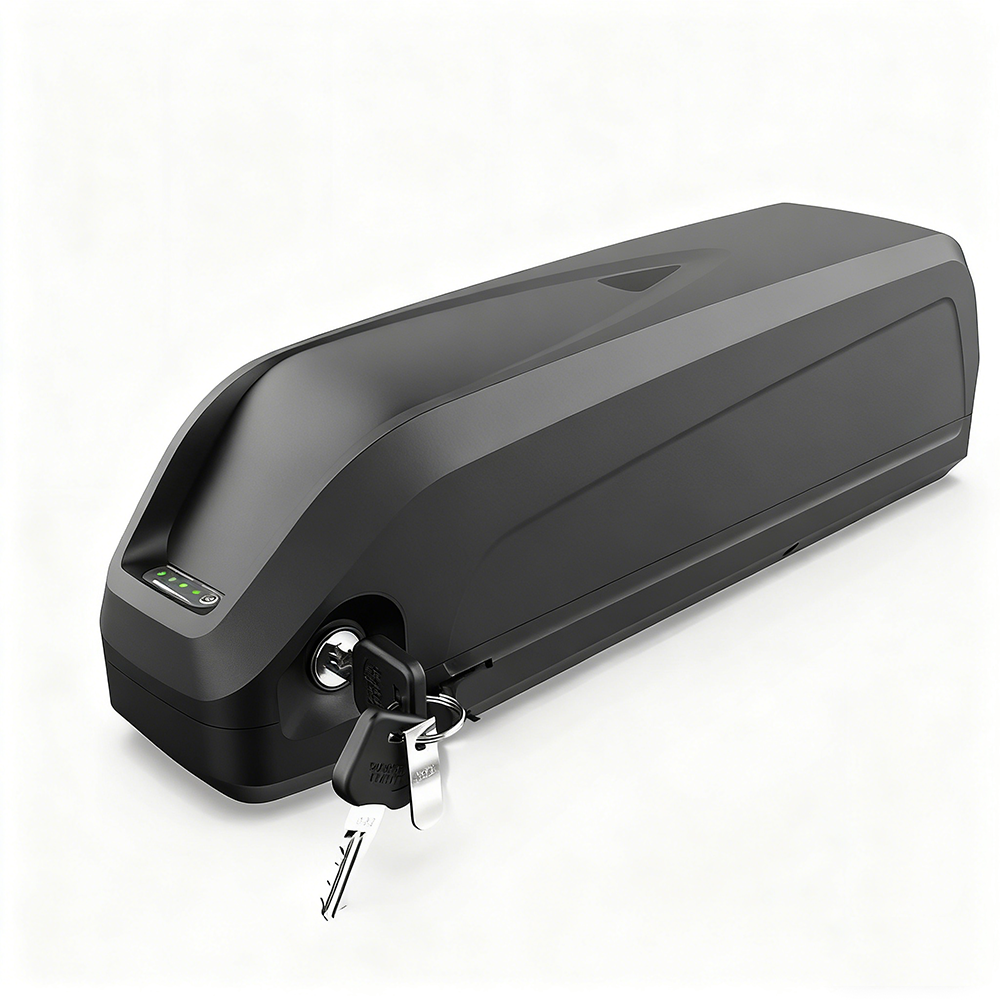
I. Battery Energy (Wh): The Foundation for Theoretical Range
The theoretical range of an electric bicycle primarily depends on the battery's energy (Wh):
Battery Energy (Wh) = Voltage (V) × Capacity (Ah)
Under the same conditions:
Higher energy means longer theoretical range
Wh is more valuable than simply looking at Ah or V
For example:
36V × 14Ah ≈ 504Wh
48V × 10.5Ah ≈ 504Wh
Both are similar in terms of energy, but their output characteristics and system efficiency are different.
In battery design, Level 1 Power usually works backward from the target range to determine a reasonable energy range, rather than simply stacking capacity.
II. Cell Performance and Consistency: Determining the Actual Usable Range
Battery range depends not only on the nominal parameters but also on the quality and consistency of the battery cells themselves.
Key influencing factors include:
Energy density
Internal resistance level
Discharge platform stability
Cycle degradation rate
If the cell consistency is poor, the battery will trigger protection prematurely during discharge, resulting in the actual usable capacity being lower than the nominal capacity.
In electric bicycle battery projects, Level 1 Power strictly implements:
Cell sorting
Internal resistance and voltage consistency control
Aging testing and capacity re-inspection
These processes directly affect the battery's actual range performance.
III. Battery Management System (BMS): An Overlooked Range Factor
The BMS is not only a safety component but also affects range efficiency. A well-designed BMS can:
Reduce false protection triggers
Optimize the discharge range
Improve effective energy utilization
Conversely, a BMS with improperly set parameters may prematurely limit current or shut down even when there is still power remaining, thus shortening the actual riding distance.
For electric bicycle applications, Level 1 power solutions typically feature:
A BMS matched to the vehicle's power requirements
Stable high-current discharge design
Optional smart BMS (SOC display, communication functions)
IV. Overall Vehicle System Efficiency: Not Just a Battery Issue
Range is not solely determined by the battery; it's the result of the entire vehicle system working together.
Factors affecting system efficiency include:
Motor efficiency
Controller matching
Wiring and interface losses
Vehicle weight and wind resistance
Even with the same battery energy, different system designs will result in significantly different range performance.
When collaborating with vehicle manufacturers, Level 1 Power typically gets involved early in the project to evaluate battery parameter matching from a system perspective to improve overall energy efficiency.
V. Usage Environment and Riding Habits: Key Variables for Actual Range
In actual use, the following factors significantly affect range:
Frequent rapid acceleration
Prolonged high-power output
High proportion of uphill riding
Riding in low-temperature environments
Especially in low-temperature environments, the discharge efficiency of lithium batteries decreases, and the range is correspondingly shortened.
For different usage environments, Level 1 Power can provide:
Battery cell solutions adapted to low-temperature applications
Optimized structure and insulation design
Battery parameter configuration adjusted for operating conditions
VI. Comprehensive Suggestions from Level 1 Power's Perspective
To truly improve the range of electric bicycles, it is recommended to optimize from the following dimensions:
Reasonable selection of battery energy range
Using battery cells with good consistency
BMS solution matched to the vehicle's power
Optimizing overall vehicle system efficiency
Designing battery solutions based on actual scenarios
Range improvement is not the improvement of a single parameter, but the result of system optimization.
FAQ | Common Questions about Electric Bicycle Battery Range
1. Does a larger battery capacity always mean a longer range?
Theoretically, higher energy means longer range, but an oversized battery will increase the weight of the vehicle, which may actually reduce system efficiency.
2. Why is there a significant difference between the stated range and the actual riding range?
Road conditions, riding habits, temperature, battery consistency, and system efficiency all affect the actual range.
3. Will a higher voltage result in better range?
Battery life is primarily determined by the Wh (watt-hour) capacity, not simply the voltage. Higher voltage is beneficial for high power output, but it doesn't necessarily directly increase battery life.
4. Is it normal for battery life to decrease in low-temperature environments?
Yes, it's a normal phenomenon. Low temperatures reduce the discharge efficiency of lithium batteries, and the driving range will decrease accordingly.
5. Does the BMS affect battery life?
Yes. A well-designed BMS can improve effective energy utilization, while inappropriate protection parameters may lead to premature current limiting or power cutoff.
6. Does Level 1 Power support customized batteries optimized for extended range?
Level 1 Power can provide battery solutions optimized for extended range based on the vehicle system and application scenarios.



 E-mail


 +86 13510702894